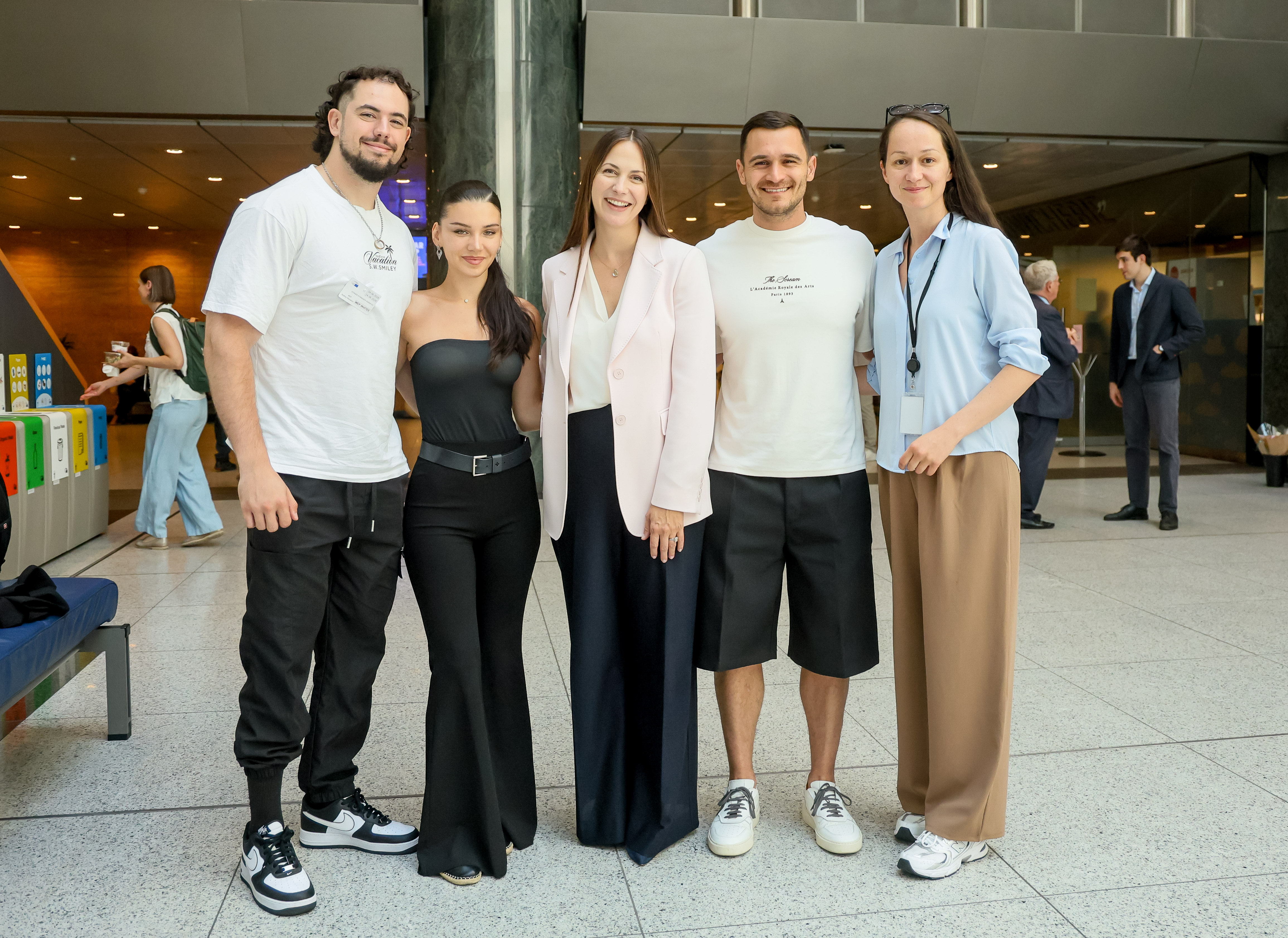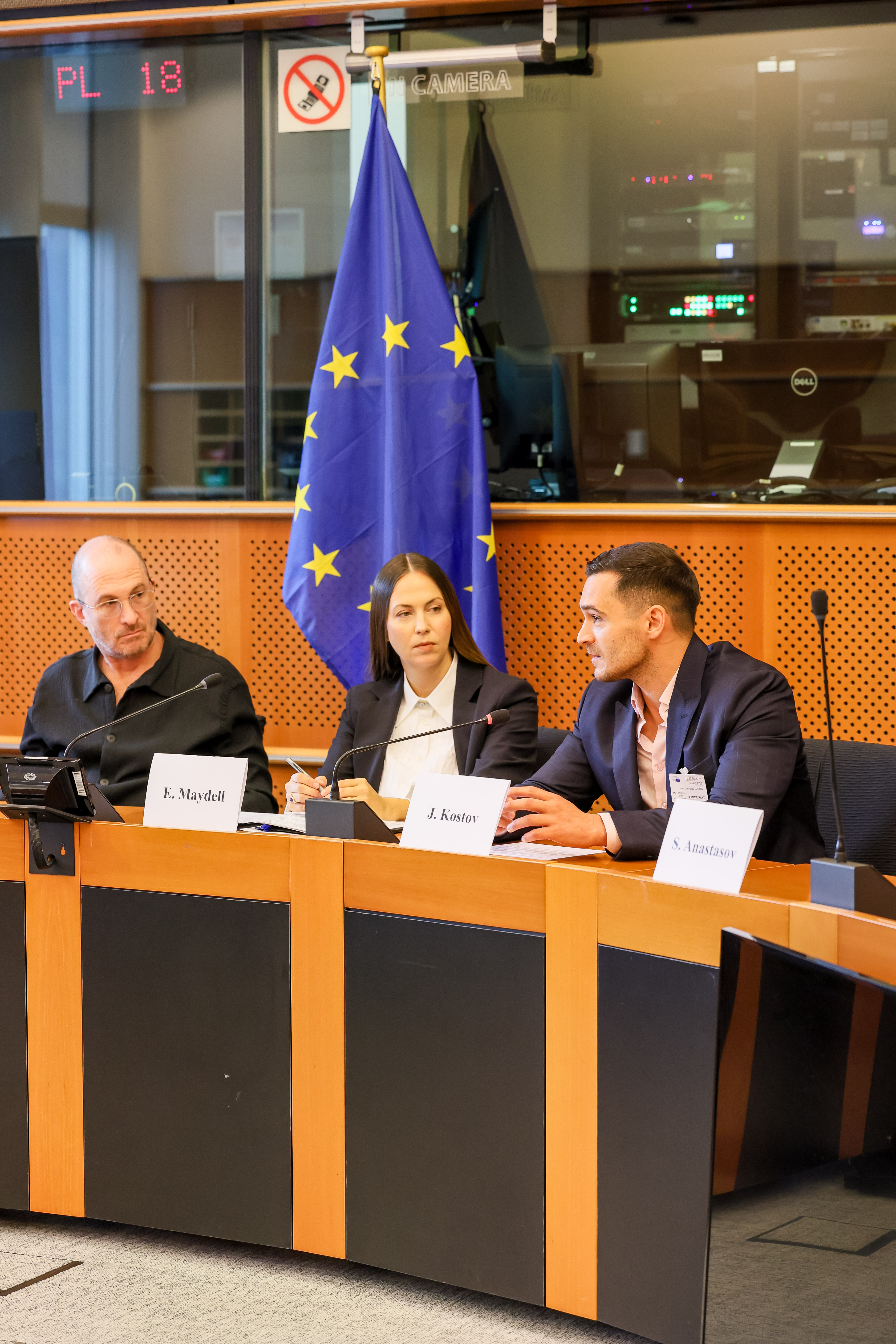
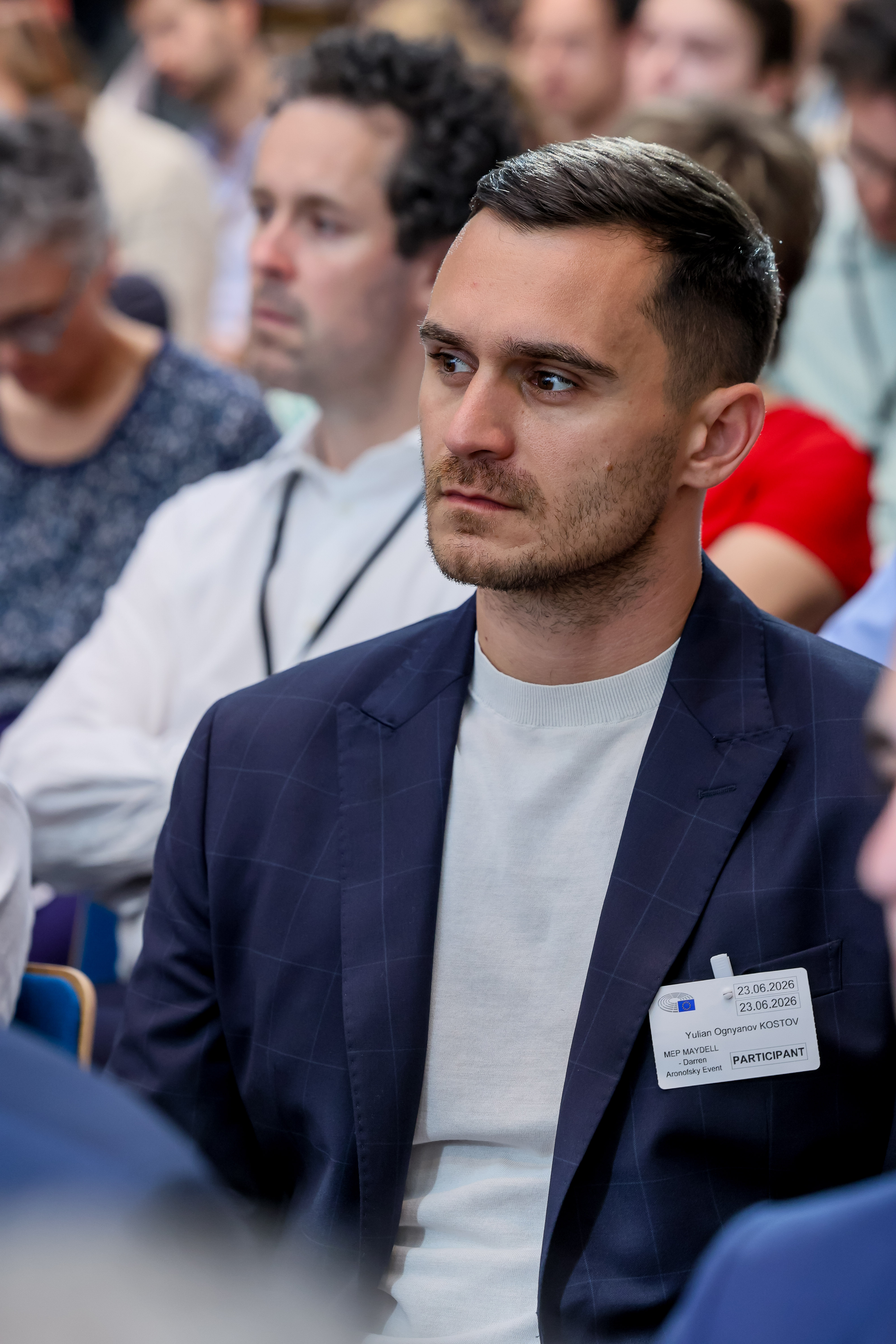
On 23 June 2026, actor and producer and European Young Leader class of '23 Julian Kostov took part in a European Parliament event in Brussels on the impact of artificial intelligence on the creative industries. He was there at the invitation of Bulgarian MEP Eva Maydell, one of the Parliament’s lead negotiators on the EU AI Act.
Oscar-nominated director Darren Aronofsky delivered the keynote. He spoke to an audience of creatives about how his AI studio, Primordial Soup, uses the technology for storytelling. While AI models can produce striking images, he said, what they lack is emotion and humanity. The challenge is to turn them into tools for storytelling.
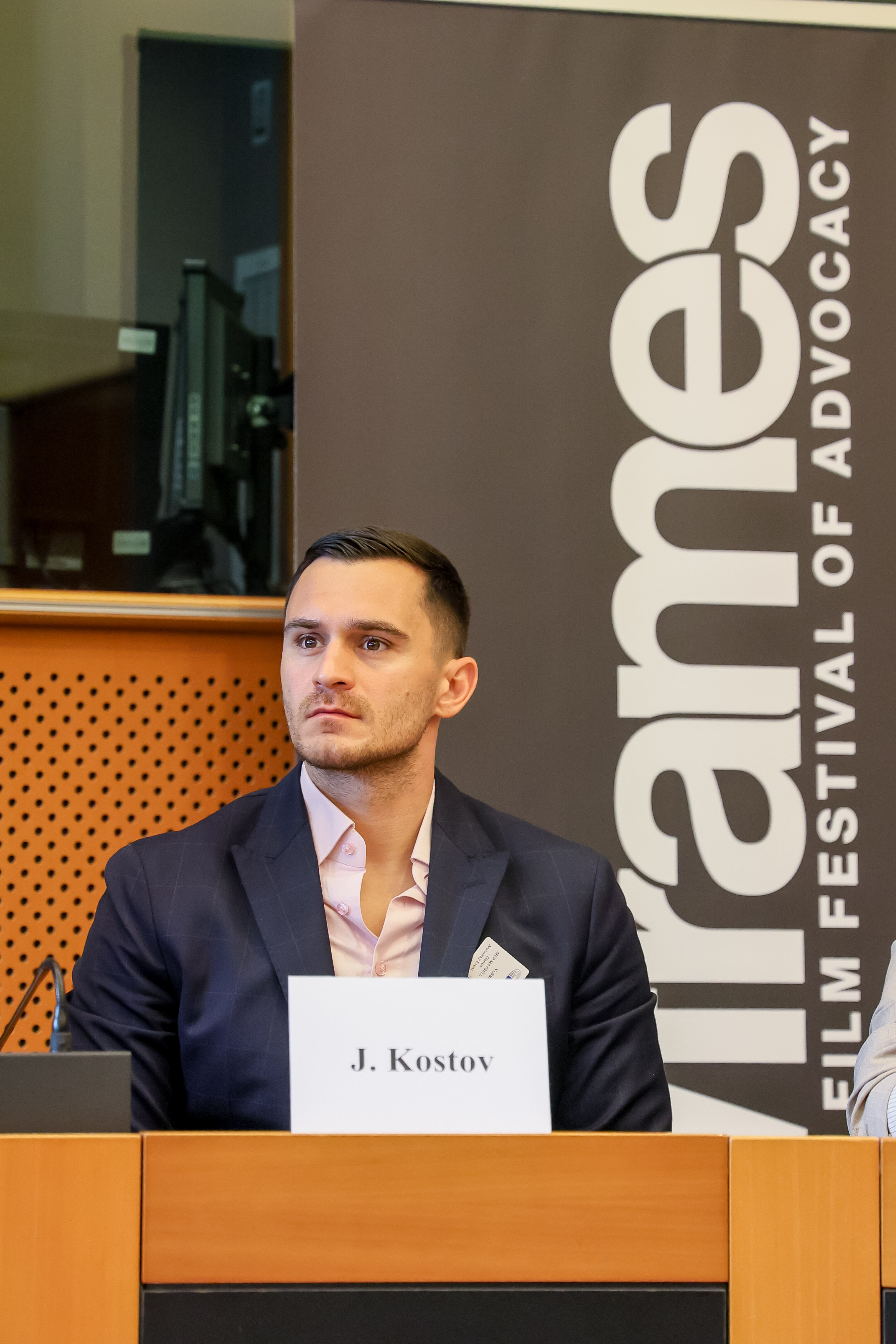
Kostov was one of two invited speakers to deliver a two-minute address before the floor opened for discussion with the panel. He focused on a group often missing from the AI debate: independent artists, and especially Eastern European performers, who have no major label or union to negotiate protections on their behalf.
In his speech, Kostov used a recent example: an AI-generated cover of Stromae’s “Papaoutai” that passed 100 million streams. The cover is legal, and the original songwriter is paid only a small share of what the AI version earns. He welcomed the EU’s new requirement for AI companies to disclose their training data, but pointed out that disclosure only proves a model was trained on an artist’s work, without creating any way to get paid for it.
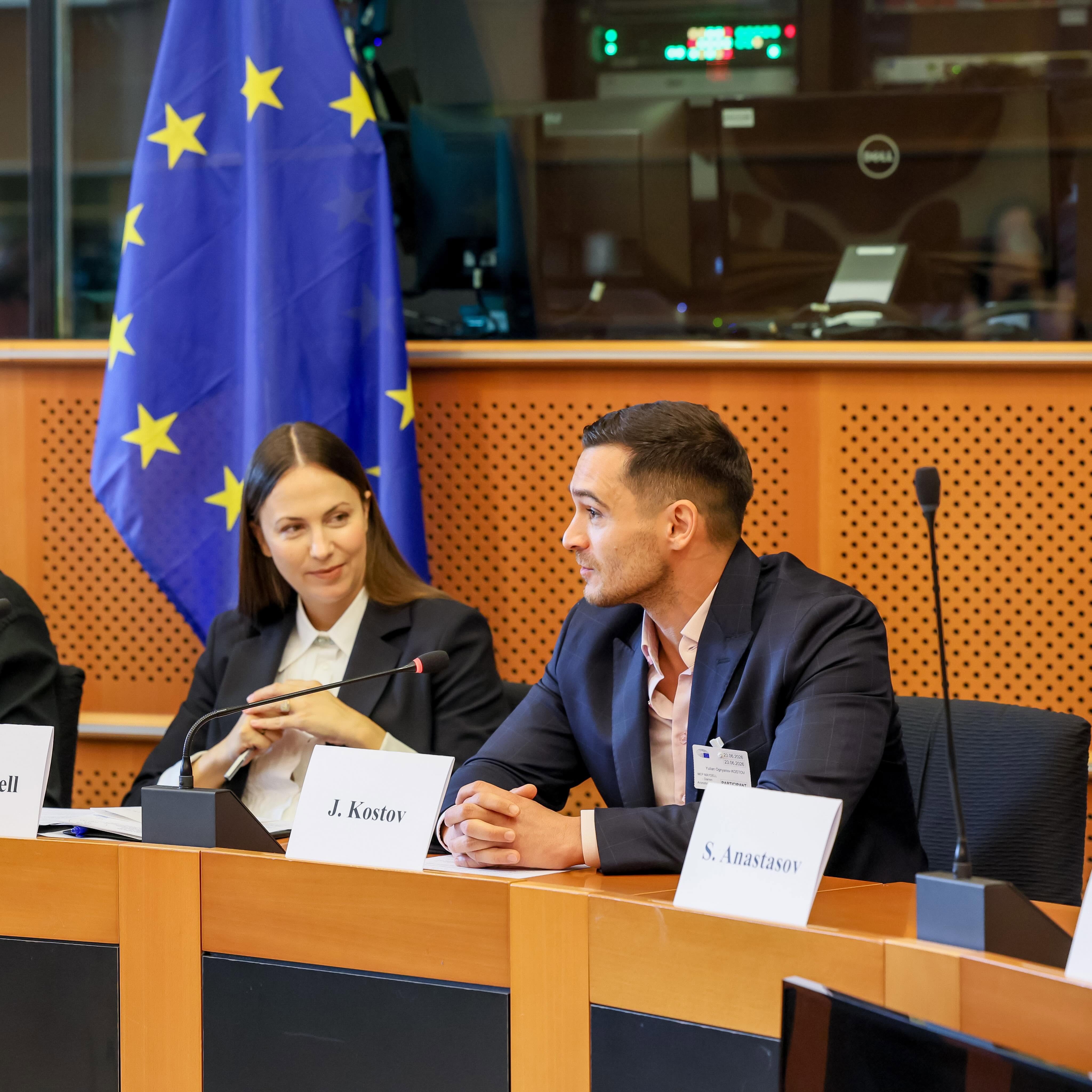
He proposed a single system with three parts. Artists could opt in and be paid when their work is licensed for AI training. They could also opt out entirely. And anyone whose work has already been used without consent would have a public, searchable claims process. On top of that, he called for a new rule: when AI-generated content makes money, the majority of that revenue should go to the pool of artists the model was trained on.
The same day, the European Parliament hosted the launch of the Human Consent Registry. It’s a free tool from the non-profit RSL Media, co-founded by Cate Blanchett, that lets anyone state whether AI companies may use their name, image, voice or likeness. Blanchett presented it alongside director Steven Soderbergh, at an event also hosted by Eva Maydell. “Human consent is not an impediment to progress,” Blanchett told the audience.
The day put the European Parliament at the centre of a global conversation about creators’ rights in the age of AI. For Kostov, it was a chance to make sure independent and Eastern European artists had a voice in it.
Julian Kostov’s full speech.
Delivered at the European Parliament, Brussels, 23 June 2026. Figures and timelines are as of that date.
"Three weeks ago, an AI cover of Stromae’s “Papaoutai,” sung by an African choir that doesn’t exist, passed 100 million streams. It’s legal. Spotify keeps about 30% of streaming revenue itself; roughly 56% goes to the recording side and 14% to songwriting. That 14% is Stromae’s share. The recording side, four times the size, goes to the label and the AI tool that produced it. This isn’t an isolated case. Search YouTube right now for Eminem’s “Rap God” reimagined as 1950s jazz, or 50 Cent’s “In Da Club” as 1960s Motown soul. Dozens of these AI genre-covers are circulating, each one crediting the original songwriter for a fraction of what the cover itself earns.
The EU already requires AI companies to disclose what they trained on. That law takes effect in six weeks. But it only proves a model was trained on your work. It creates no process to get paid for it. That’s the gap we need to close.
So here’s the proposal: one system, not three separate fights. Creators opt in and get paid when AI companies license their work for training. A platform called Created by Humans is already doing this for books; it just needs to cover everyone. Creators can also opt out, the way visual artists already can through registries like Spawning AI’s “Have I Been Trained.” And for anyone already used without consent, which is most of us, a public, searchable claims process, not a lawsuit, to recover what’s owed.
Then the piece that doesn’t exist anywhere yet: when that AI output is monetized, whether through YouTube ads, a book sale or a film, the majority of that revenue goes by law to the pool of artists the model was trained on, not the person who typed three words into a prompt.
We don’t need new philosophy. We need the EU’s own non-waivable remuneration rights confirmed to cover AI, and one registry that turns “we can prove it happened” into “we got paid for it.”